In the world of professional illustration, what the client sees is usually just the final image. A polished artwork appears on a website, in a magazine, inside an app, or on product packaging. It looks effortless. Clean lines, confident composition, harmonious color. From the outside, it can seem as if the idea emerged fully formed in a single burst of inspiration. What remains invisible is the intellectual, strategic, and analytical labor behind that image. And yet, it is precisely this invisible work that defines the real value of an illustrator.
Clients rarely pay only for the time spent drawing. They invest in thinking, interpretation, problem solving, and decision making. However, if this process remains hidden, the project may be perceived as “just a picture.” Learning how to present your process is one of the most powerful ways to increase perceived value, justify pricing, and build long term professional trust.
The invisible work begins long before the first sketch. It starts with research. Professional illustrators analyze the client’s brand, audience, competitors, tone of voice, and communication goals. They study references not to copy them, but to understand visual territory. They ask questions that the client may not even have considered. What emotion should the image evoke. What action should it encourage. What problem should it clarify. This analytical phase transforms illustration from decoration into communication strategy.
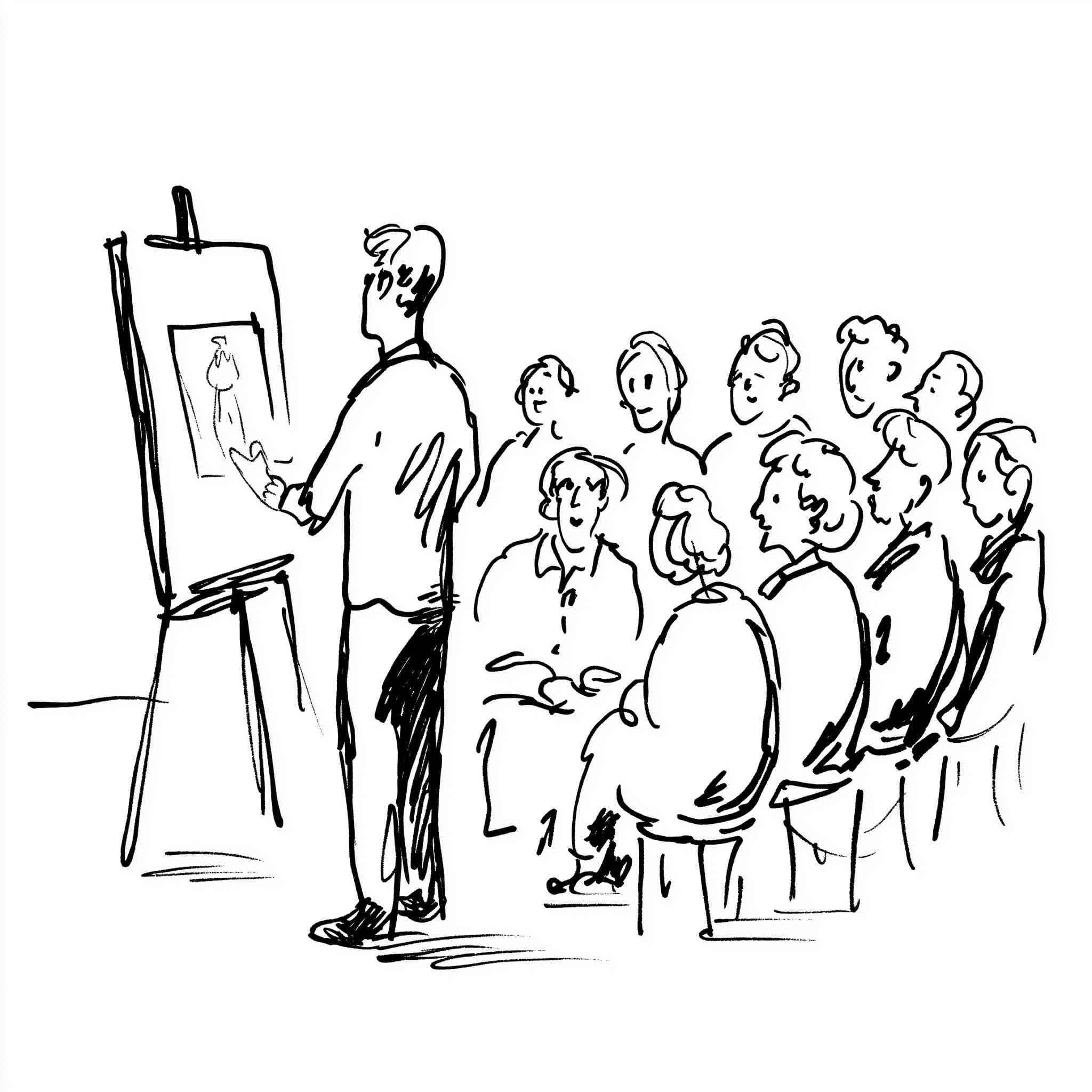
When presenting a project, sharing elements of this research immediately shifts perception. Instead of simply sending a sketch, an illustrator can briefly explain the reasoning behind it. For example, describing how certain colors align with brand psychology, or how a specific composition guides the viewer’s attention to the key message. Even a short paragraph outlining strategic decisions makes the work appear intentional and considered.
Sketch exploration is another part of the invisible process. Most successful illustrations are preceded by multiple rejected ideas. Thumbnails, compositional experiments, alternative metaphors, character variations. Showing selected early sketches demonstrates depth of thinking. It communicates that the final concept was chosen deliberately, not randomly. Clients feel reassured when they see that options were explored and evaluated.
However, presenting process does not mean overwhelming the client with every draft. Curation is essential. The goal is not to expose uncertainty, but to reveal structured development. Showing three strong conceptual directions with a short explanation of each is far more effective than sending twenty rough attempts without context. The presentation should reflect confidence and clarity.
Art direction thinking is another invisible layer. Professional illustrators constantly make micro decisions about balance, rhythm, contrast, and hierarchy. They adjust scale to emphasize importance. They refine shapes to improve readability. They modify details to avoid visual noise. These refinements are often subconscious for experienced artists, but articulating them increases perceived expertise.
For example, instead of saying “I adjusted the layout,” an illustrator might explain that shifting the focal point improved visual flow and strengthened narrative emphasis. By naming the principle behind the decision, the illustrator positions themselves as a visual strategist rather than a technician.
Color development is particularly powerful when presented thoughtfully. Showing a brief evolution of palette options and explaining why one was chosen can significantly elevate the project’s perceived complexity. Clients may not consciously understand color theory, but they recognize when decisions are grounded in logic rather than taste alone.
Another crucial aspect of invisible work is problem solving. Almost every project involves constraints. Limited space. Tight deadlines. Complex content. Conflicting stakeholder opinions. When an illustrator frames the final solution as a response to specific challenges, the value becomes tangible. Instead of “Here is the illustration,” the message becomes “Here is the solution to your communication problem.”
Process documentation can also strengthen professional positioning beyond a single project. Case studies are particularly effective. A well structured case study outlines the client’s objective, the research phase, conceptual exploration, refinement process, and final outcome. It tells a story of transformation. This narrative format helps future clients understand what they are truly paying for.
Transparency builds trust, but it must be balanced with authority. Clients should feel guided, not burdened. When presenting work, clarity of communication matters as much as visual quality. Short, confident explanations that highlight intention are more persuasive than long technical descriptions.
Another important dimension of invisible work is emotional intelligence. Illustrators interpret client feedback, read between the lines, and adjust communication styles. They manage revisions diplomatically. They anticipate concerns before they are expressed. Although this labor is rarely visible, it strongly influences project success. Reflecting professionalism and structure in presentations reassures clients that they are working with a reliable partner.
Timing also affects perception. Instead of delivering everything at once at the end of a project, structured checkpoints can reinforce value. Sharing a concept phase, then a refined sketch phase, then a near final version demonstrates progression. Each stage reinforces the idea that the illustration is being built carefully.
Language plays a powerful role in presenting process. Words such as strategy, narrative, visual hierarchy, alignment, consistency, and audience engagement elevate the discussion. They shift the project from subjective preference to professional reasoning. When clients see that decisions are based on principles, they are more likely to trust recommendations.
It is equally important to avoid minimizing your own work. Many illustrators unintentionally reduce perceived value by saying things like “It was just a quick sketch” or “It was simple.” Even if the execution felt intuitive, the expertise behind it was not simple. Reframing the work as efficient rather than easy maintains professionalism.
Documenting your process visually can also enhance communication. Mood boards, annotated sketches, and side by side comparisons between initial and final versions create a sense of depth. These materials do not need to be overly polished. They simply need to demonstrate progression and reasoning.
Over time, consistently presenting process changes how clients perceive you. Instead of viewing you as someone who produces images on request, they begin to see you as a creative consultant. This shift influences budgets, timelines, and respect. When value is visible, negotiation becomes easier because the client understands what is involved.
Ultimately, the invisible work of an illustrator is where the true expertise lies. Drawing skill is essential, but strategic thinking differentiates professionals from hobbyists. By thoughtfully presenting research, concept exploration, decision making, and refinement, illustrators make their intellectual contribution visible.
The final image may occupy a single page or screen, but behind it stands analysis, experimentation, and intentional design. When that process is communicated clearly, clients no longer see “just a picture.” They see insight, structure, and problem solving. And that perception transforms not only the project’s value, but the illustrator’s entire professional position.