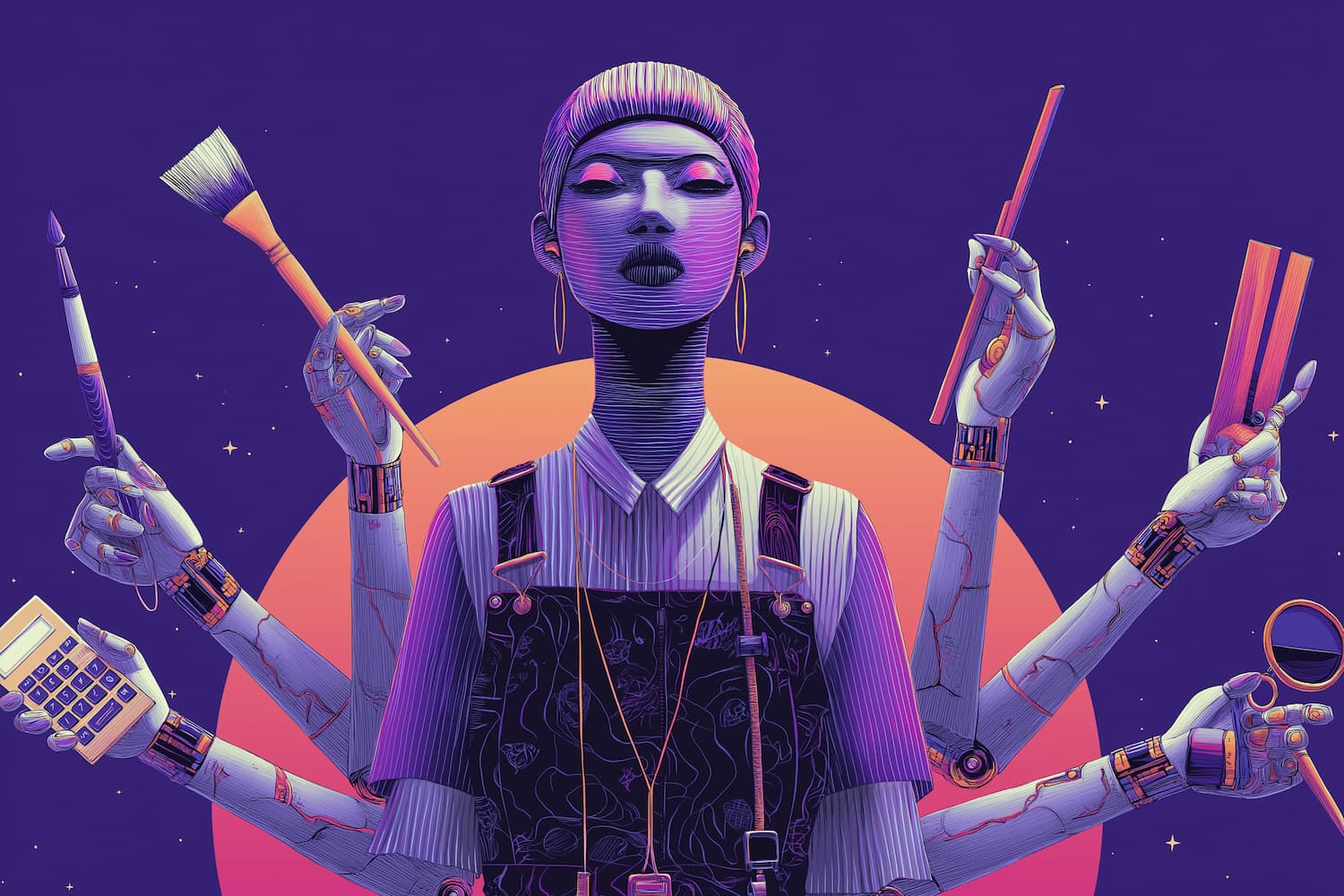
Digital illustration in 2026 is not simply evolving. It is redefining how artists create, collaborate, and build sustainable careers. The boundaries between fine art, commercial design, technology, and interactive media continue to dissolve. What once required expensive studios and powerful desktop computers can now be achieved on lightweight tablets with cloud rendering and real time feedback.
For students and professional illustrators, understanding trends is not about copying fashionable styles. It is about recognizing shifts in technology, audience behavior, and visual culture. Below are the key directions shaping digital illustration in 2026.
1. Hybrid AI and Human Workflows
Artificial intelligence has become a standard part of the creative toolkit. In 2026, successful illustrators do not compete with AI. They direct it.
Generative systems are widely used for rapid concept exploration, mood boards, lighting tests, and compositional variations. Artists may generate dozens of visual drafts within minutes and then refine selected ideas manually. The human role has shifted toward art direction, storytelling, and final detailing.
Clients increasingly value artists who demonstrate intentional decision making, narrative clarity, and consistent visual language. Technical execution alone is no longer enough. Creative leadership is the differentiator.
2. Strong Personal Visual Identity
With the volume of online imagery growing exponentially, recognizability has become essential. In 2026, illustrators focus heavily on building a clear and consistent visual signature.
This includes:
• Distinctive color systems
• Character design logic
• Repeating compositional structures
• Recognizable brush textures
Audiences follow artists, not just projects. Platforms reward consistency and strong authorship. As a result, many illustrators limit their stylistic range publicly while continuing to experiment privately. Brand thinking has become inseparable from artistic development.
3. Immersive and Spatial Illustration
Flat images are no longer the only standard format. Spatial illustration designed for augmented reality, virtual reality, and interactive environments is growing rapidly.
Illustrators now create layered artworks that function in depth. Parallax effects, 3D lighting integration, and spatial storytelling are common. Even when the final output remains a 2D image, depth simulation and volumetric light effects influence visual composition.
Understanding basic 3D tools and camera logic has become an advantage, even for artists who primarily identify as 2D illustrators.
4. Editorial Illustration with Conceptual Depth
As automated image generation becomes more common, editorial clients increasingly seek strong conceptual thinking. In 2026, successful editorial illustration focuses on metaphor, cultural commentary, and emotional intelligence.
Illustrators are expected to interpret complex topics such as climate ethics, digital privacy, biotechnology, and identity politics. Visual solutions must communicate ideas clearly while remaining visually compelling.
Minimalism combined with symbolic depth is particularly popular. Smart visual storytelling outweighs decorative complexity.
5. Eco Conscious Digital Practices
Sustainability has entered the digital art conversation. While digital work avoids physical materials, energy consumption of large scale rendering and blockchain technologies has raised awareness.
Artists and studios increasingly:
• Optimize file sizes
• Use energy efficient hardware
• Avoid unnecessary computational rendering
• Choose sustainable printing partners
Clients also request environmentally responsible production pipelines for physical merchandise and publications. Ethical awareness enhances professional credibility.
6. Hyper Detailed Textures and Tactile Simulation
Despite technological advances, audiences still respond to tactile aesthetics. In 2026, many illustrators simulate traditional materials such as ink, charcoal, risograph printing, oil paint, and screen printing within digital environments.
The goal is not nostalgia but emotional resonance. Texture adds warmth and perceived authenticity. High resolution brushes and custom texture libraries allow artists to merge analog feeling with digital precision.
The contrast between clean vector shapes and textured overlays is especially popular in branding and publishing.
7. Motion Integrated Illustration
Static images increasingly coexist with subtle motion. Loop animations, animated lighting shifts, and micro interactions are integrated into websites, digital magazines, and social media campaigns.
Illustrators now consider how their artwork behaves over time. Even a simple moving shadow or blinking character can increase engagement significantly.
Basic knowledge of timeline animation, motion principles, and export formats has become part of the modern illustrator’s skill set.
8. Narrative Character Universes
Character design remains one of the strongest commercial directions in 2026. However, the focus has shifted from single illustrations to entire narrative ecosystems.
Artists build recurring characters that appear across:
• Social media content
• Merchandise
• Webcomics
• Interactive experiences
• Brand campaigns
This long term storytelling approach strengthens audience loyalty. It also creates scalable intellectual property opportunities for illustrators who want to expand beyond freelance work.
9. Cross Industry Collaboration
Digital illustration is increasingly integrated into fields such as education technology, health communication, fintech interfaces, and scientific visualization.
Clear visual explanation is in high demand. Complex data requires accessible storytelling. Illustrators who understand information design, user experience principles, and visual hierarchy are especially competitive.
The line between illustrator and visual communicator continues to blur.
10. Emotional Authenticity Over Perfection
Perfect gradients and flawless rendering are no longer the ultimate goal. Audiences in 2026 respond to authenticity, vulnerability, and expressive imperfection.
Sketch lines, visible construction marks, and raw compositions are sometimes intentionally preserved. The human presence behind the artwork matters.
In an era where automated tools can generate technically polished images instantly, emotional honesty becomes the real currency.
What This Means for Students and Professionals
The digital illustration landscape in 2026 rewards adaptability. Technical skill remains important, but strategic thinking, storytelling ability, and personal identity define long term success.
Artists who thrive are those who:
• Combine traditional fundamentals with emerging technologies
• Develop a recognizable visual language
• Understand audience psychology
• Stay curious and experiment continuously
The future of digital illustration is not about replacing artists with machines. It is about expanding creative possibilities. Technology accelerates execution, but imagination, empathy, and conceptual depth remain uniquely human strengths.
For emerging illustrators, this is an exciting moment. The tools are more powerful than ever. The platforms are global. The demand for visual communication continues to grow.
In 2026, digital illustration is not just a profession. It is a multidisciplinary language that connects art, technology, and culture in new and dynamic ways.