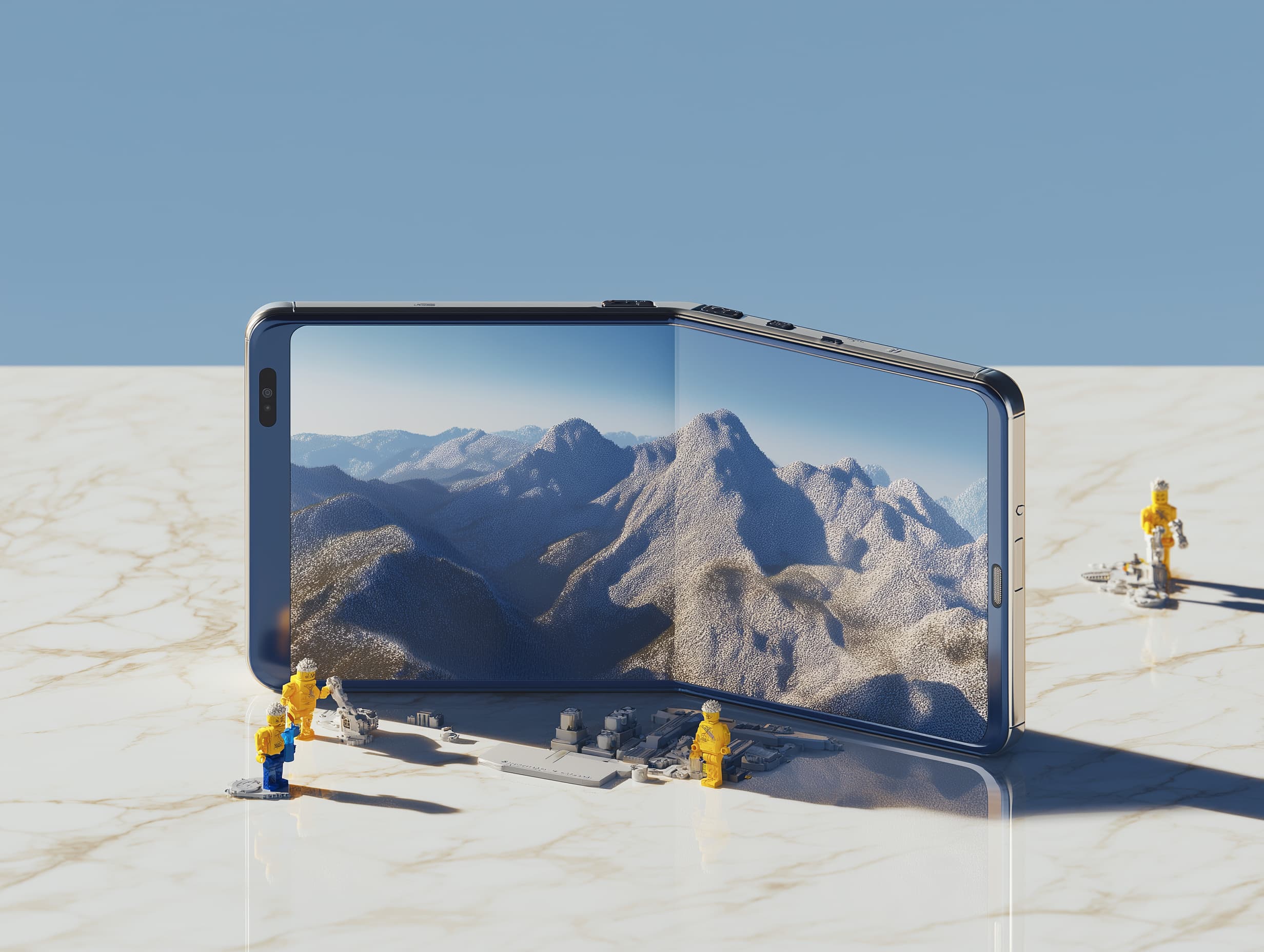
The rapid development of wearable technologies and flexible displays is transforming the field of digital illustration. Smartwatches, augmented reality glasses, mixed reality headsets, smart rings, and foldable devices are no longer experimental concepts. They are part of everyday life. For illustrators, this shift creates not just new formats, but entirely new design logic.
Illustration is no longer confined to static rectangles on flat screens. It now lives on wrists, moves with the body, bends with the surface of a device, and sometimes floats in physical space. Understanding how to create visuals for wearable technology requires a different mindset, one that combines art, ergonomics, and user experience.
The Shift from Canvas to Context
Traditional illustration assumes a stable viewing environment. A poster hangs on a wall. A book page stays still. A tablet screen is held at a predictable distance. Wearable devices break these assumptions.
A smartwatch screen is viewed for seconds at a time. AR glasses overlay visuals onto unpredictable real world backgrounds. Foldable screens change size depending on how they are used.
This means illustration must adapt to context. The designer must ask:
Where is the user?
Are they walking, exercising, commuting?
How long will they look at the screen?
What lighting conditions surround them?
Illustration for wearable technology is not just about aesthetics. It is about clarity under dynamic conditions.
Micro Scale Visual Communication
One of the biggest challenges in wearable illustration is scale. Smartwatches and compact wearable displays offer extremely limited screen space. Every pixel matters.
At small sizes:
• Complex compositions fail
• Thin lines disappear
• Subtle color gradients lose impact
• Decorative details create visual noise
Successful wearable illustrations rely on simplified forms, bold contrast, and strong silhouettes. Shape language becomes more important than texture. Clear hierarchy is essential.
Icons and micro illustrations must communicate meaning instantly. In many cases, the user glances at the screen for less than two seconds. The visual must function at first sight.
This pushes illustrators toward reduction and precision. Minimalism here is not a stylistic choice. It is a functional necessity.
Flexible Screens and Adaptive Composition
Foldable phones and flexible displays introduce another challenge. The canvas is no longer fixed. A device may shift from compact mode to expanded tablet size within seconds.
Illustration for flexible screens must adapt across formats. This requires modular thinking.
Instead of designing a single fixed composition, illustrators create:
• Scalable components
• Expandable background systems
• Repositionable characters
• Adaptive negative space
A character placed at the center of a folded screen may shift to the side when the screen expands. Background elements may reveal additional depth or details as the canvas grows.
This dynamic approach transforms illustration into a responsive system rather than a static image.
Spatial Illustration in Augmented Reality
Augmented reality glasses represent an even greater evolution. In AR environments, illustration exists within physical space.
It can:
• Float at eye level
• Attach to real objects
• Follow the user’s movement
• Appear anchored to architectural structures
This requires understanding spatial logic. Illustrators must consider perspective, scale, lighting, and environmental contrast. A flat image placed in 3D space often feels artificial. Instead, artists design layered assets that simulate depth and volume.
Shadows and light behavior become critical. An illustration that ignores real world lighting conditions may break immersion.
In this context, illustrators benefit from basic knowledge of 3D tools and spatial composition principles.
Movement as a Core Element
Wearable interfaces rarely rely on static imagery. Micro animations improve clarity and emotional engagement.
On smartwatches, subtle motion can:
• Guide attention
• Indicate progress
• Confirm interaction
• Reduce cognitive load
For AR devices, motion can signal direction or interaction points.
Illustrators working in wearable contexts increasingly collaborate with motion designers or develop animation skills themselves. Even minimal movement can significantly increase usability.
The future of wearable illustration is not purely static. It is time based.
Ergonomics and Visual Comfort
Wearable devices are used in intimate proximity to the body. A smartwatch rests on the skin. AR glasses sit directly in front of the eyes.
Visual comfort becomes essential.
High contrast combinations that work on larger screens may feel aggressive on a small wrist display. Fast blinking animations may cause discomfort in AR environments.
Illustrators must consider:
• Eye strain
• Motion sensitivity
• Readability under sunlight
• Long term visual exposure
Soft transitions, controlled brightness, and balanced color systems help maintain comfort. Illustration in wearable design must respect human physiology.
Branding in Constrained Spaces
Brands increasingly extend their identity to wearable platforms. This creates new challenges for visual consistency.
How can a complex brand illustration system translate to a circular smartwatch screen? How does a character based brand behave when displayed at one centimeter in height?
This requires distillation. Brand elements must be simplified without losing personality.
Many companies now develop micro illustration guidelines specifically for wearable contexts. Illustrators who understand this process become valuable strategic partners.
Illustration as Interface
In wearable technology, the line between illustration and interface disappears. A character may act as a virtual assistant. A visual element may respond to gestures or biometric data.
Illustration becomes functional.
For example:
• A breathing animation guides meditation rhythm.
• A progress ring integrates decorative and informational elements.
• A virtual avatar responds to voice commands.
In such cases, illustration is not decoration. It shapes user behavior.
This demands collaboration between illustrators, UX designers, and developers. Understanding interaction logic enhances creative impact.
Technical Awareness
While illustrators do not need to become engineers, technical awareness is increasingly important.
Key considerations include:
• Screen resolution and pixel density
• Refresh rate limitations
• Battery efficiency
• File size constraints
• Transparency handling
Heavy textures and complex gradients may increase processing load. Efficient design supports device performance.
Illustrators who understand technical limitations can create work that is both beautiful and practical.
The Future Landscape
Wearable technology continues to evolve. Flexible displays may soon extend beyond phones into clothing and accessories. Mixed reality headsets are becoming lighter and more socially integrated.
As these platforms expand, illustration will move further into daily life. It will accompany users while they walk, work, train, and communicate.
This shift requires illustrators to think beyond traditional frames. The canvas is no longer a rectangle. It is a surface that bends, a space that floats, or a screen that lives on the body.
Conclusion
Illustration for wearable technologies and flexible screens represents one of the most dynamic frontiers in digital art. It combines aesthetics with ergonomics, storytelling with interface logic, and creativity with technical precision.
To succeed in this field, illustrators must:
• Embrace simplification without losing identity
• Understand adaptive composition
• Learn basic spatial and motion principles
• Consider comfort and context
• Collaborate across disciplines
The opportunity is significant. As devices become more integrated into human life, visual language becomes more influential. Illustrators are no longer just image makers. They are shaping how people interact with technology at the most personal level.
Wearable illustration is not a niche trend. It is a signal of where digital visual culture is heading.